
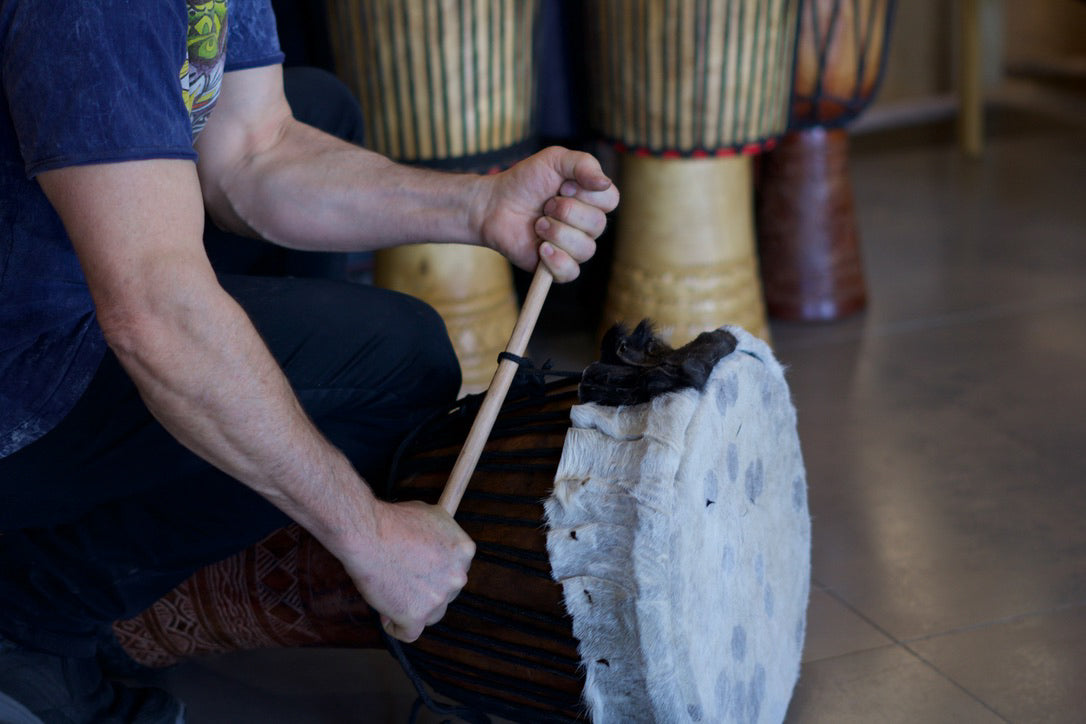
A djembe is more durable than you think—provided you know a few essentials. Whether you’ve just brought home your first drum from Tam-Tam Mania or you're planning to buy one, it’s natural to have questions:
-
How often do I need to tune it?
-
Will the goatskin crack in the Canadian cold?
-
Am I going to damage it by playing the "wrong" way?
The good news: djembes are "living" instruments built for longevity. They’ve survived generations of travel, heat, and intense playing. They don’t need constant pampering; they just need simple, informed care.
[Read our complete Djembe Buying Guide]
Why Djembe Care Matters
While rugged, a djembe is sensitive to four main factors: tension, humidity, temperature, and technique. Basic maintenance ensures:
-
The goatskin remains supple and strong.
-
Your tuning remains stable.
-
The drum produces its signature crisp slaps and deep bass.
When Should You Tune Your Djembe?
There is no "calendar schedule" for tuning. At Tam-Tam Mania, we always say: Let the sound tell you when it’s time.
Signs it’s time to tune:
-
The bass sounds "floppy" or hollow.
-
Slaps lack clarity and "pop."
-
The drum feels dull or unresponsive under your hands.
Pro Tip for Beginners: If your drum sounded great when you bought it from us, you likely won't need to touch the ropes for several months. Often, what a beginner thinks is a "tuning issue" is actually just developing hand technique!
Caring for the Goatskin Head
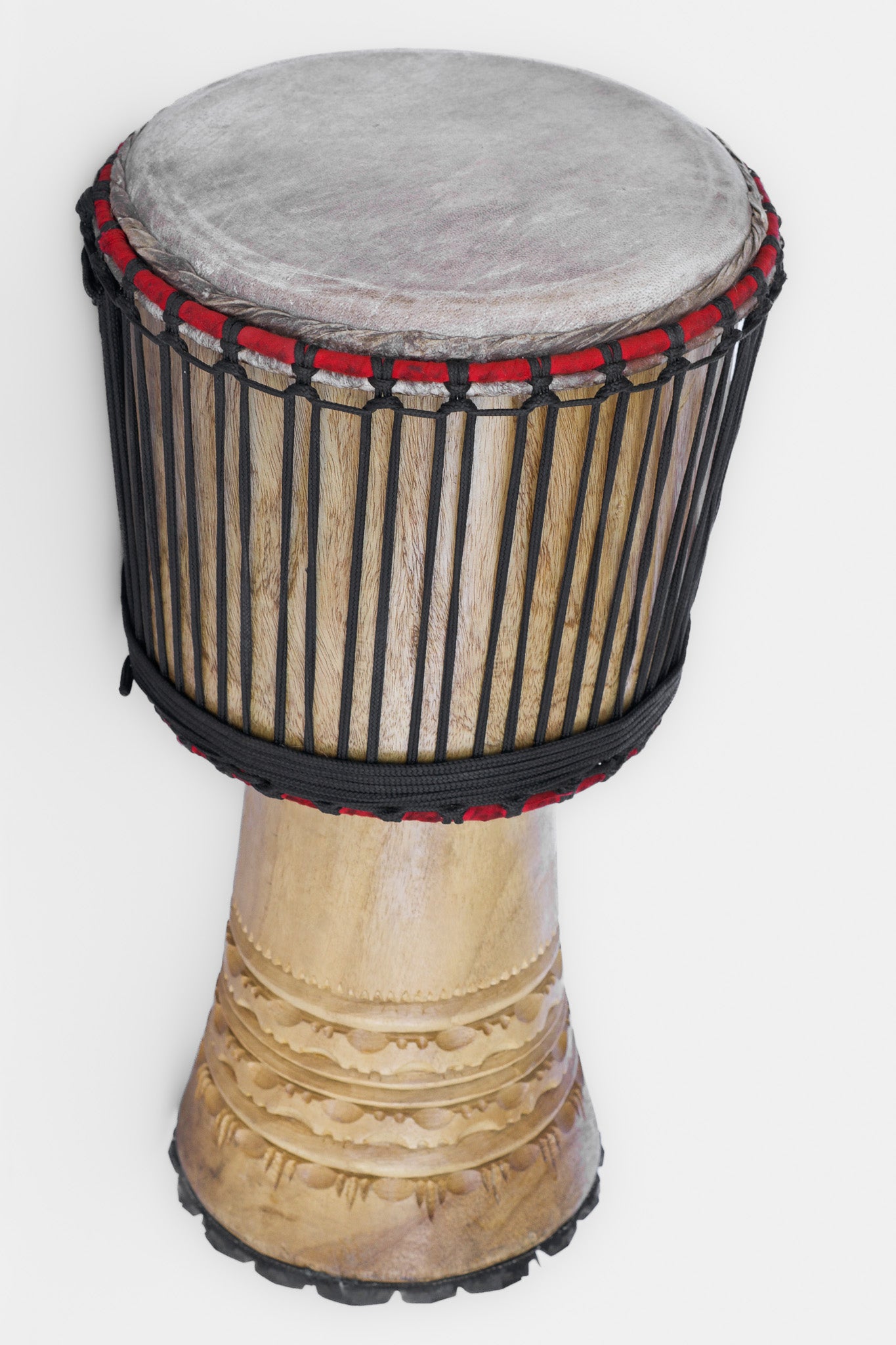
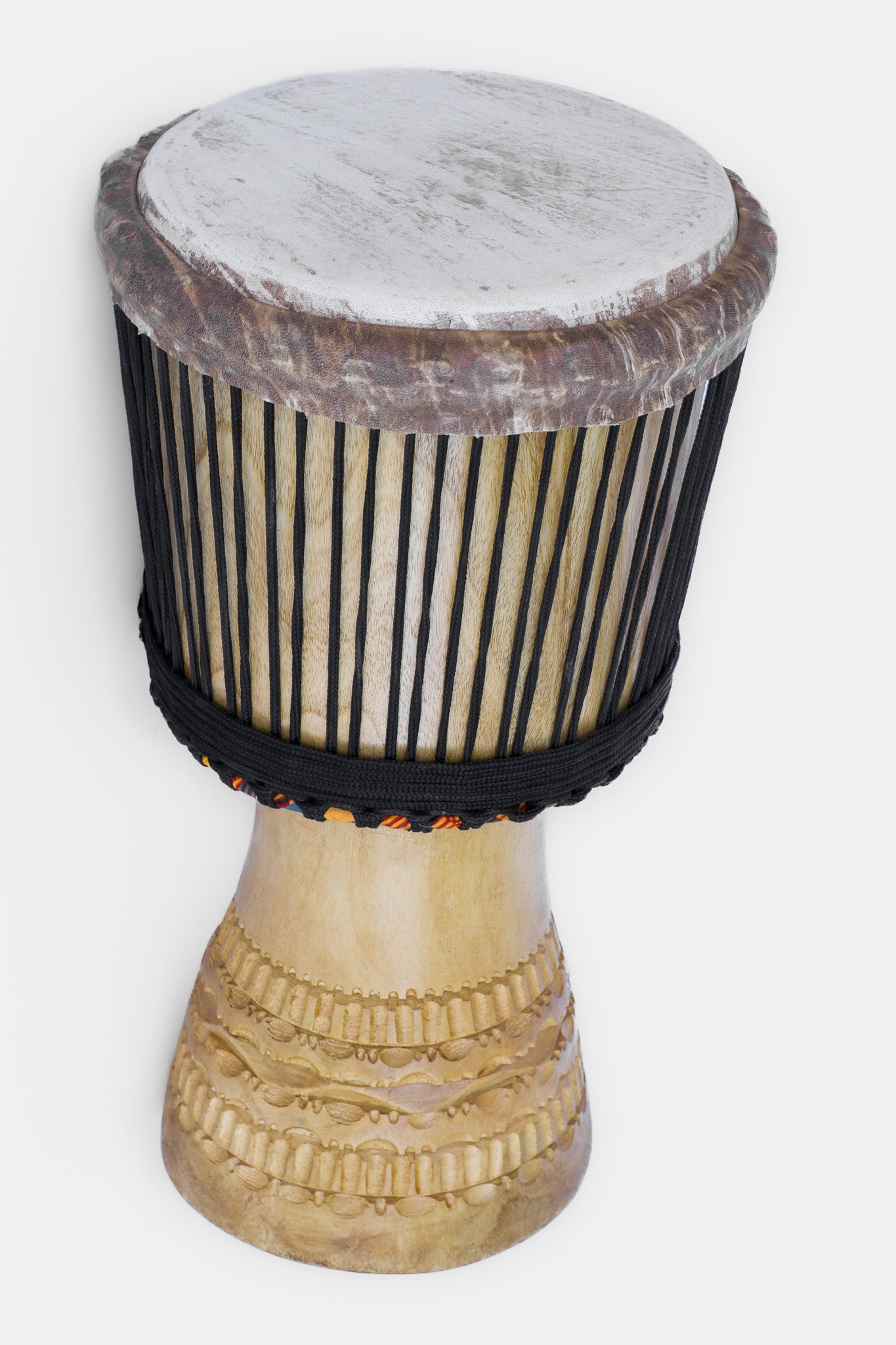
Natural goatskin is what gives the djembe its soul. It is an organic material that breathes and reacts to its environment.
| The Dos | The Don’ts |
| Play regularly: The oils from your hands keep the skin responsive. | No Water: Never get the skin wet. |
| Wipe with a dry cloth: Keep dust and debris away. | Avoid Direct Heat: Keep it away from radiators or fireplaces. |
| Store at room temperature: Treat it like a member of the family. | No "Hacks": Never apply oils or lotions to the skin. |
Survival Guide: Canadian Winters & Dry Air
In Montreal and across Canada, winter is the biggest challenge for djembe players. When the heat goes on, the air gets dry, causing the goatskin to tighten naturally.
-
The Pitch Will Rise: This is normal. Don't panic if your drum sounds higher in February than it did in July.
-
Acclimatize Slowly: If you’ve just brought your drum in from a cold car, let it sit in its bag for 30 minutes before playing.
-
Avoid the "Hot Zones": Never store your drum near a baseboard heater or a drafty window.
Common Beginner Mistakes to Avoid
-
Over-tuning: Tightening the ropes too early or too much can overstretch the skin.
-
The Car Trap: Never leave your djembe in a car overnight (winter or summer).
-
Blaming the Drum: Remember, a beautiful sound comes from a relaxed hand.
When to Seek Professional Help
If your ropes look uneven, the skin feels dangerously tight, or you hear a sudden "pinging" sound, it might be time for a professional touch.
Tam-Tam Mania offers expert drum care, professional tuning, and full repair services (including skin replacement) to give you peace of mind.
[Explore our Drum Repair & Tuning Services]
Protect Your Drum with Better Technique
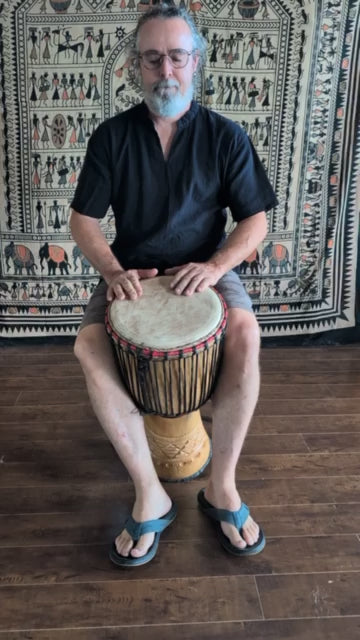
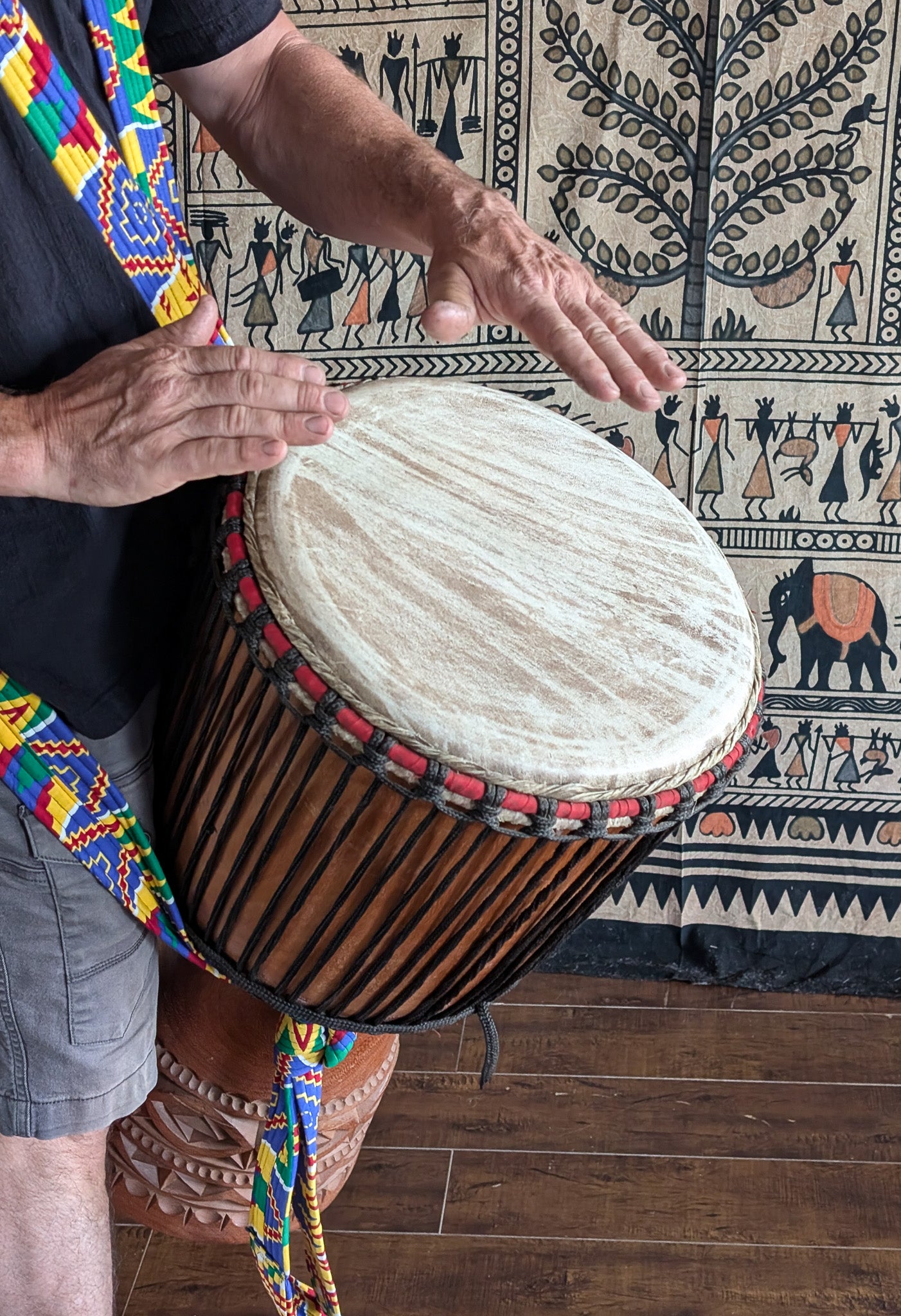
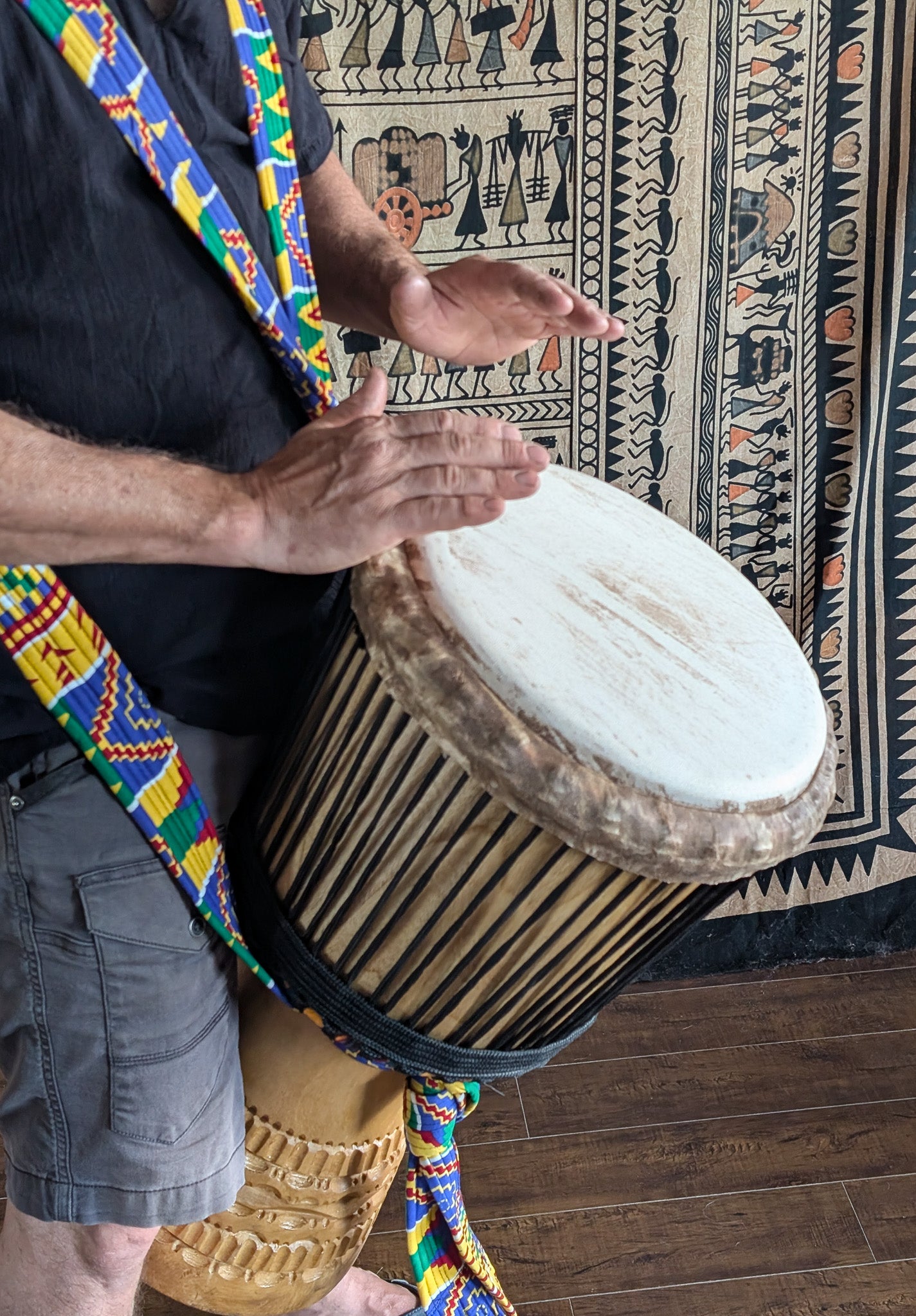
Good technique doesn't just protect your wrists—it protects the instrument. Balanced, relaxed strokes distribute tension evenly across the head and prevent premature wear.
If you’re in the Montreal area, our classes are designed to help you develop the proper form to make your drum (and your hands) last a lifetime.

Give Your Drum a New Life at Tam-Tam Mania
Is your djembe losing its voice? Whether it needs a fresh skin, a professional tune-up, or a complete structural restoration, your instrument is in expert hands here.
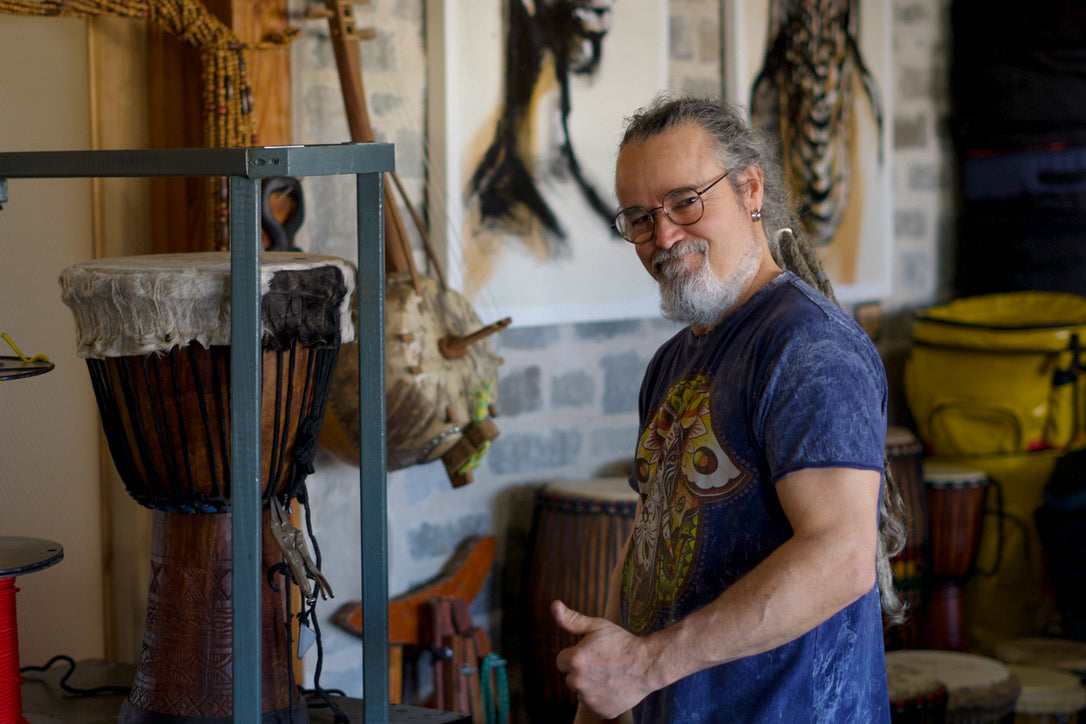
With over 12 years of specialized experience, Tam-Tam Mania’s own Éric Lafontaine is the go-to specialist for djembe and percussion repair in the Montreal community. From precision re-roping to meticulous woodwork restoration, Éric treats every drum with the skill and respect it deserves.
Why Choose Our Repair Shop?
-
Premium Materials: We personally import high-quality goat and cow skins directly from Africa, selected for their durability and tonal richness.
-
Authentic Sound: We don't just fix drums; we restore the deep bass and crisp slaps they were born to produce.
-
Craftsmanship: Every repair is handled with a deep understanding of traditional West African drum construction.
From minor adjustments to total "back-to-life" transformations, let us help your drum sound its best again.

Share:
Buying an Authentic Djembe: How to Find a Trusted Shop (Canada, USA And Beyond)