Finding your first drum is an exciting milestone, but the price tags can be confusing. You’ll find "djembes" online for $80, while professional artisanal pieces can go for well over $800.
This leads every new player to the same question: How much should I spend on my first djembe?
At Tam-Tam Mania, we want to help you find the balance between quality and cost. You don’t need to break the bank to enjoy the rhythm, but "cheap" often comes with a hidden cost that can stall your progress before you even begin.
Read our guide [Buying An Authentic Djembe: How To Find A Trusted Shop]
The Hidden Cost of a "Cheap" Djembe
On the surface, a $100 bargain drum looks like a win. However, in the world of percussion, a low price point usually indicates mass-produced materials that lead to:
-
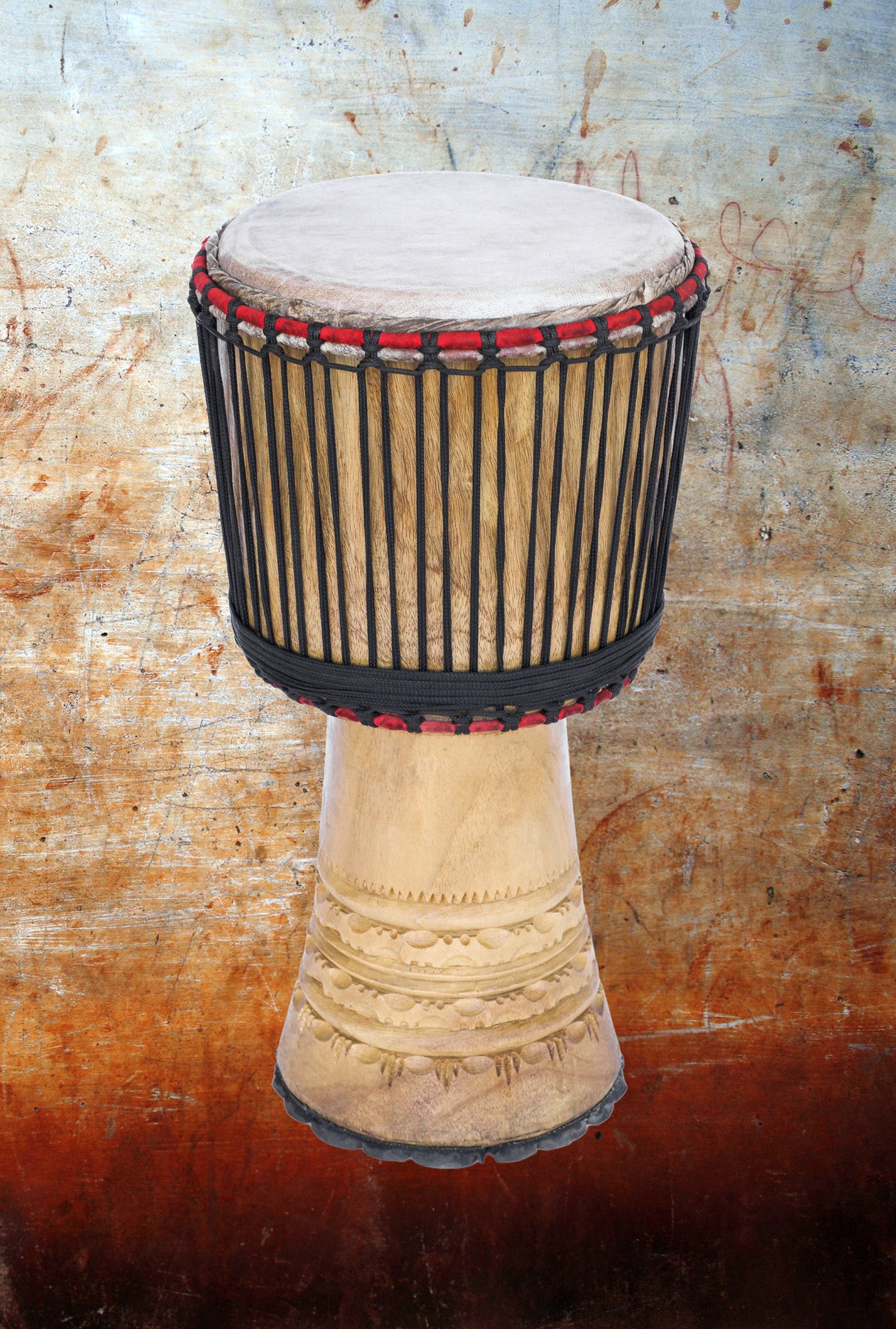
Weak Sound: Without a solid wood shell and properly treated natural skin, you won't get that satisfying "bass-tone-slap" contrast.
-
Hand Fatigue: Poorly finished rims or "dead" skins require you to hit harder to get a sound, which often leads to bruised hands and frustration.
-
Constant Retuning: Cheap, low-stretch ropes don't hold tension. You'll spend more time fighting to keep the drum in tune than actually playing it.
-
The "Double Purchase": Most people who buy a budget "souvenir" drum end up replacing it within months. That’s not saving money—it’s a $100 tax on your eventual upgrade.
Price Ranges Explained: What Are You Buying?
To understand how much to spend, it helps to know what each price bracket actually offers a beginner:
| Price Range | Quality Level | Is it worth it for a beginner? |
| Under $150 | Souvenir / Toy | No. Often frustrating to play and impossible to tune properly. |
| $250 – $450 | The "Sweet Spot" | Yes. This is where you find authentic, artisanal West African drums that can last a lifetime. |
| $700+ | Professional / Master | Optional. Beautiful instruments, but unnecessary for your first year of learning. |

Where Should You Invest Your Money?
As a beginner, you are not looking for a museum piece. To get the best value for your money, prioritize function over fashion.
You do NOT need to pay for:
-
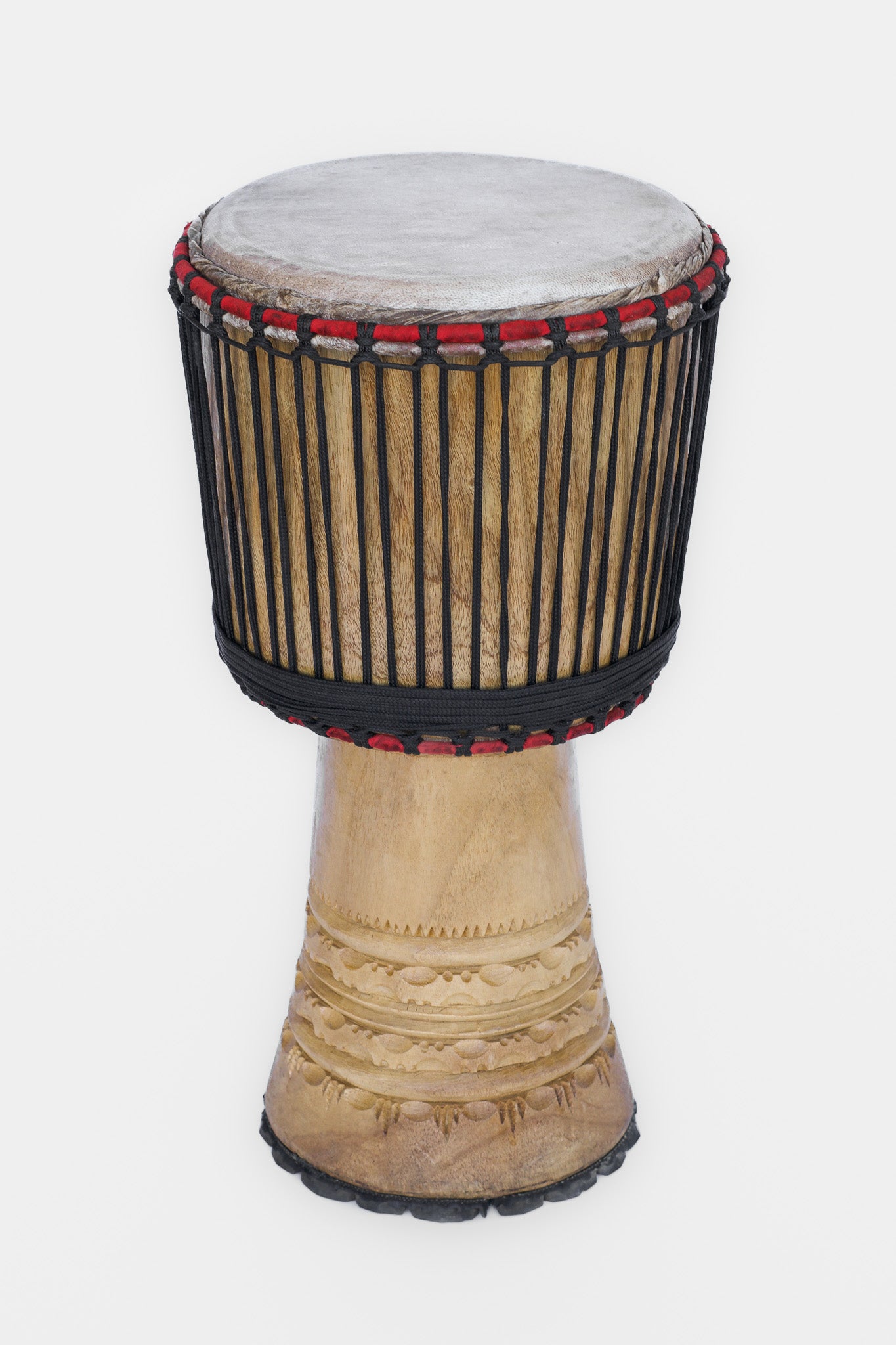
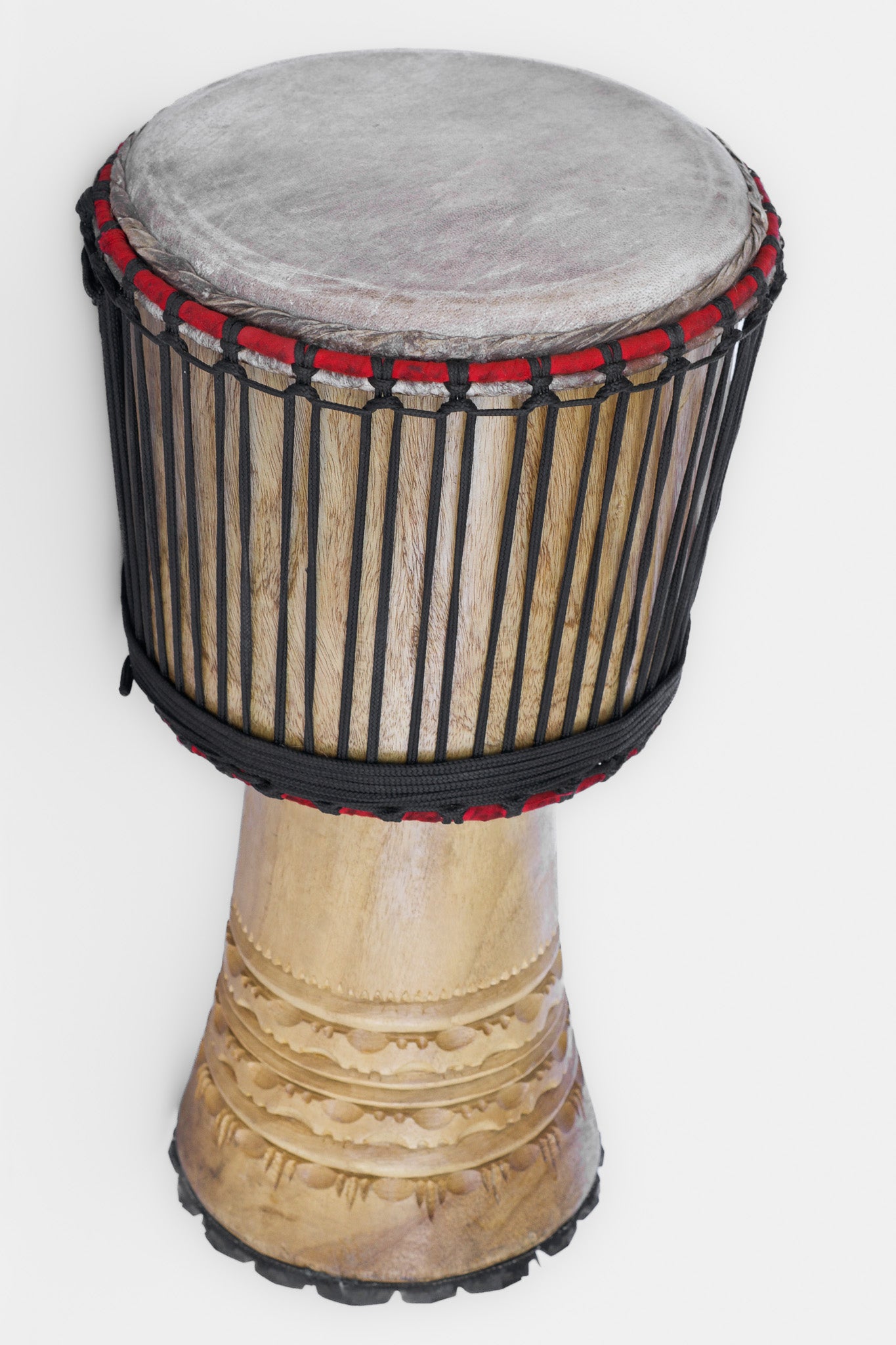
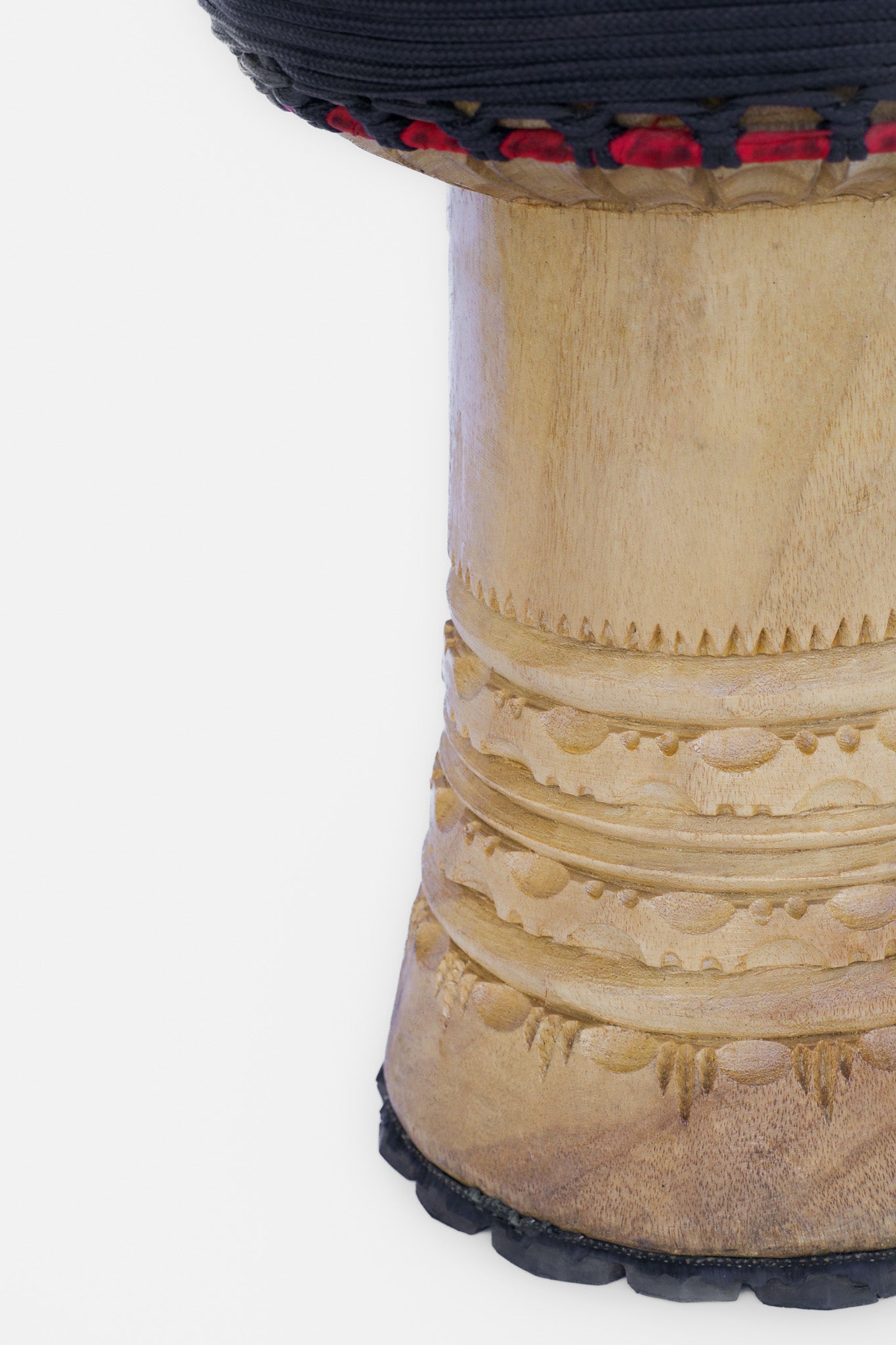
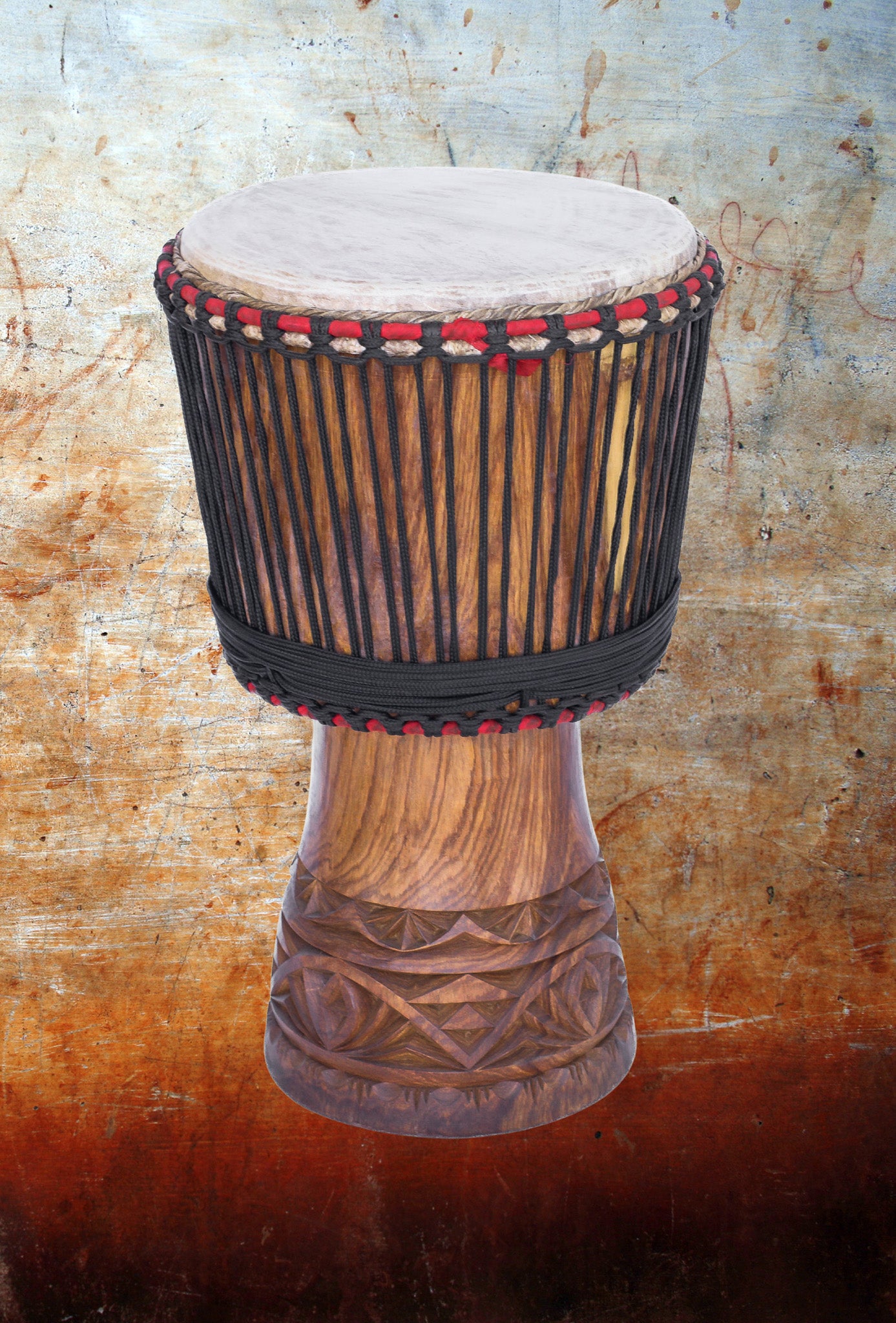
Intricate, decorative carvings (these don't affect the sound).
-
Rare, exotic hardwoods that only a master's ear can distinguish.
-
Signature "pro" branding.
You DO need to spend enough for:
-
Reliable Tuning: High-quality rope and a solid shell that stays tight.
-
Balanced Response: A skin that rewards correct technique with a clear, sharp tone.
-
Ergonomic Build: A smooth, rounded rim that protects your hands while you learn.
-
Durability: A seasoned wood shell that won't crack during seasonal humidity changes.
Read our complete guide [Buying Your First Djembe: How To Avoid Costly Mistakes]
Why a Better Drum Helps You Learn Faster
Think of a quality djembe as a teacher. When you execute a "slap" correctly, a high-quality drum rewards you with a sharp, crackling sound. A cheap drum often sounds muffled no matter how good your technique is.
When your instrument responds to your movements, your confidence grows. Drum teachers can always tell the moment a student upgrades—their technique improves almost overnight because the drum is finally "talking back" to them.
Our Recommendation
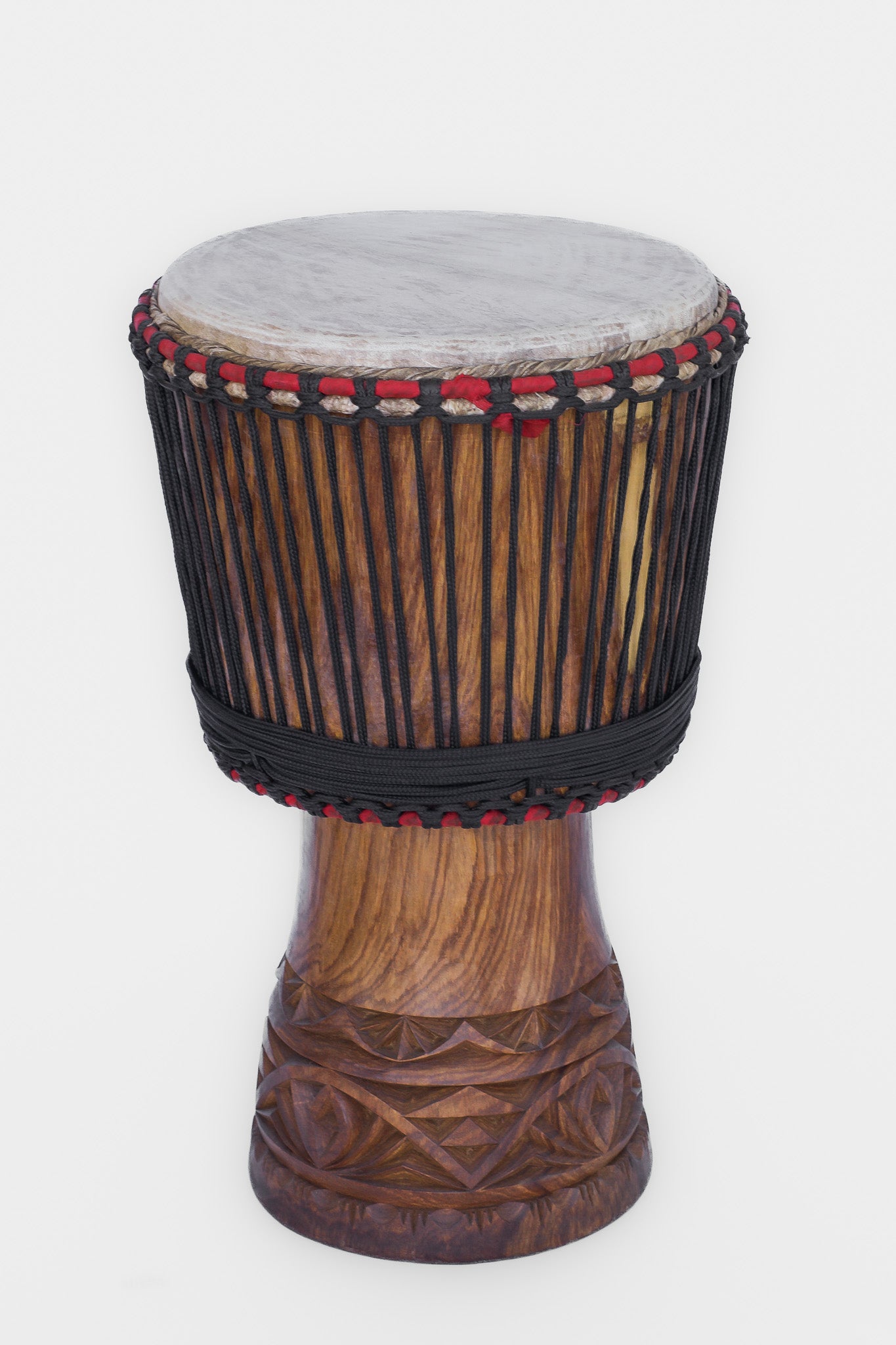
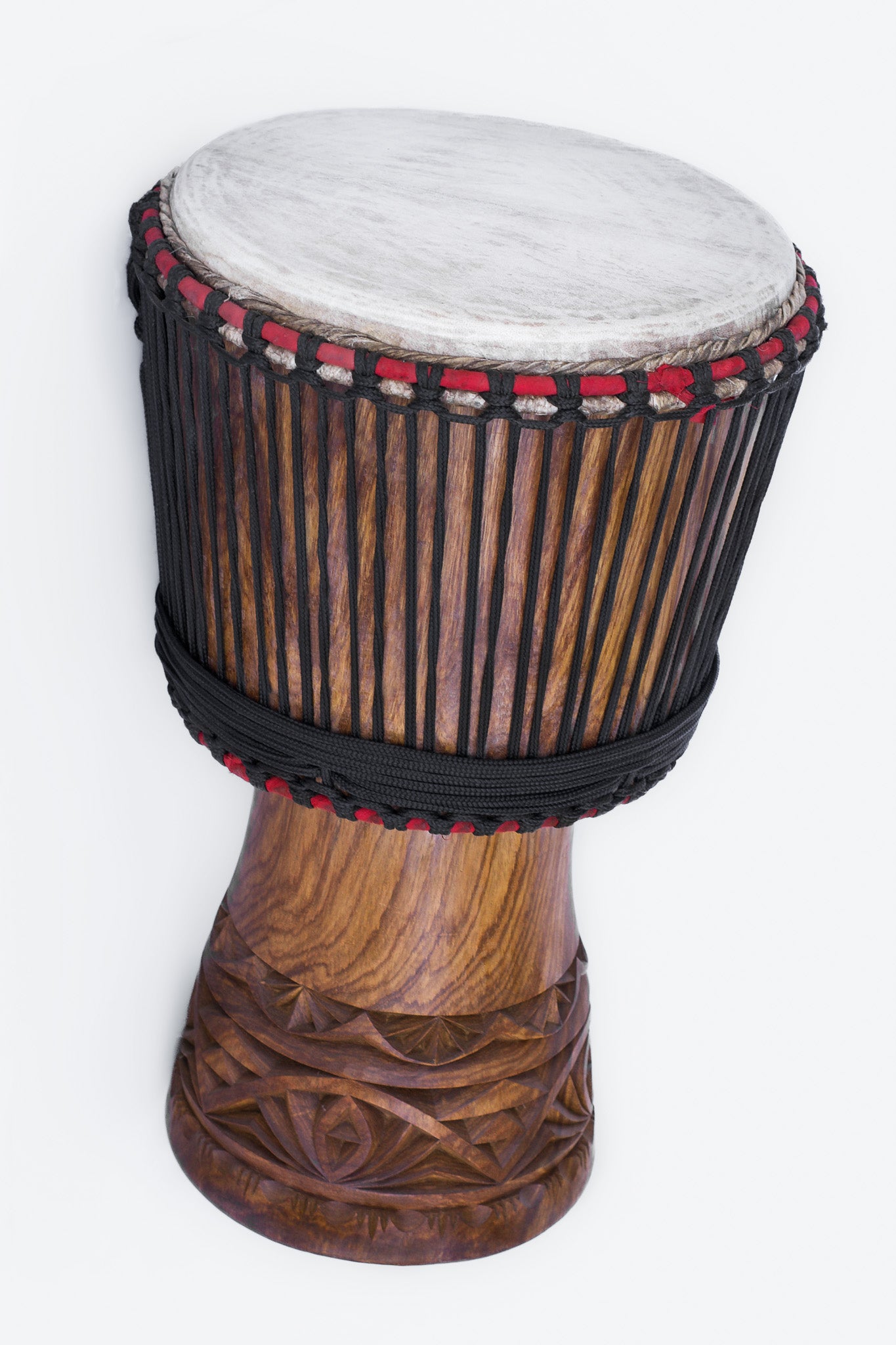
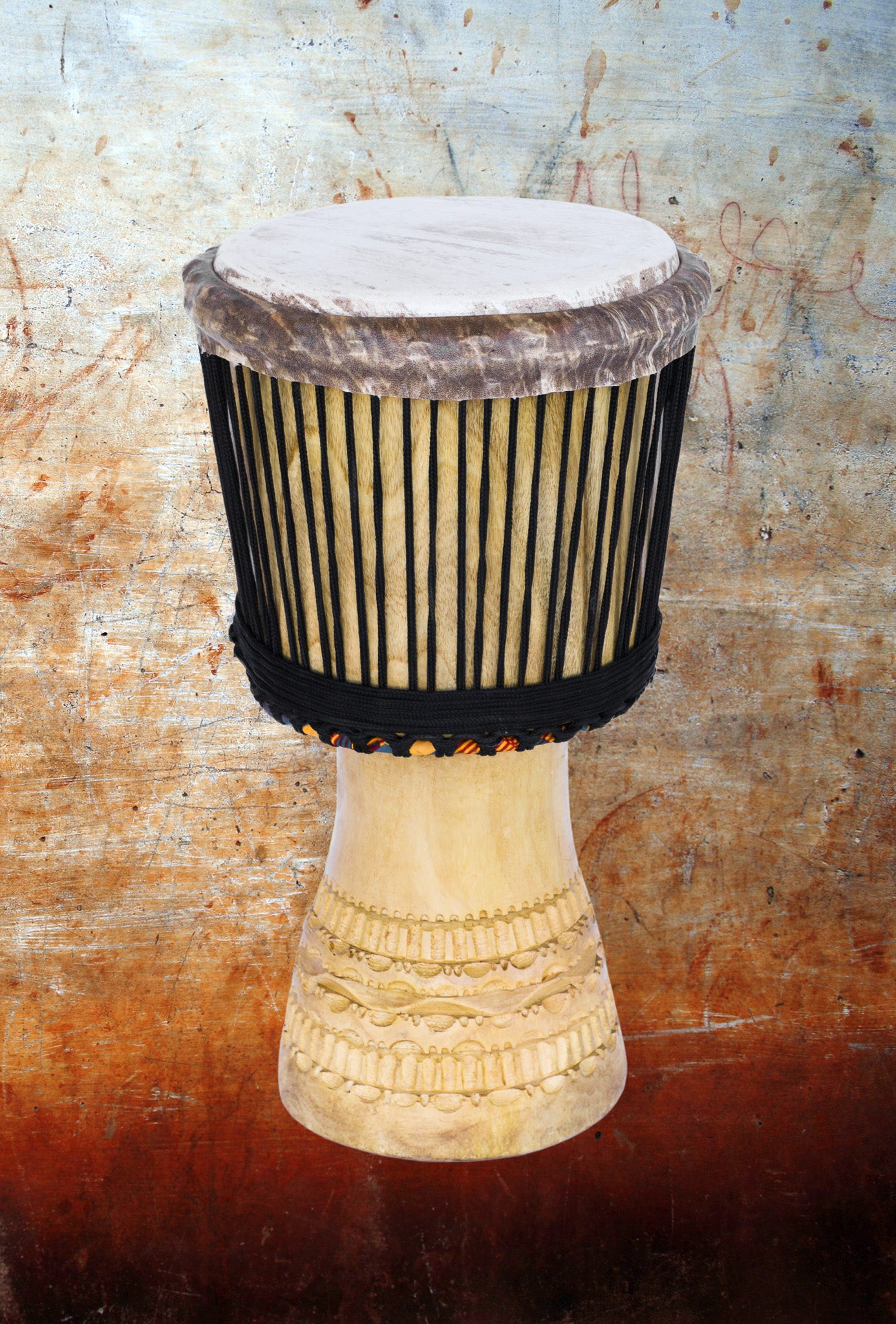
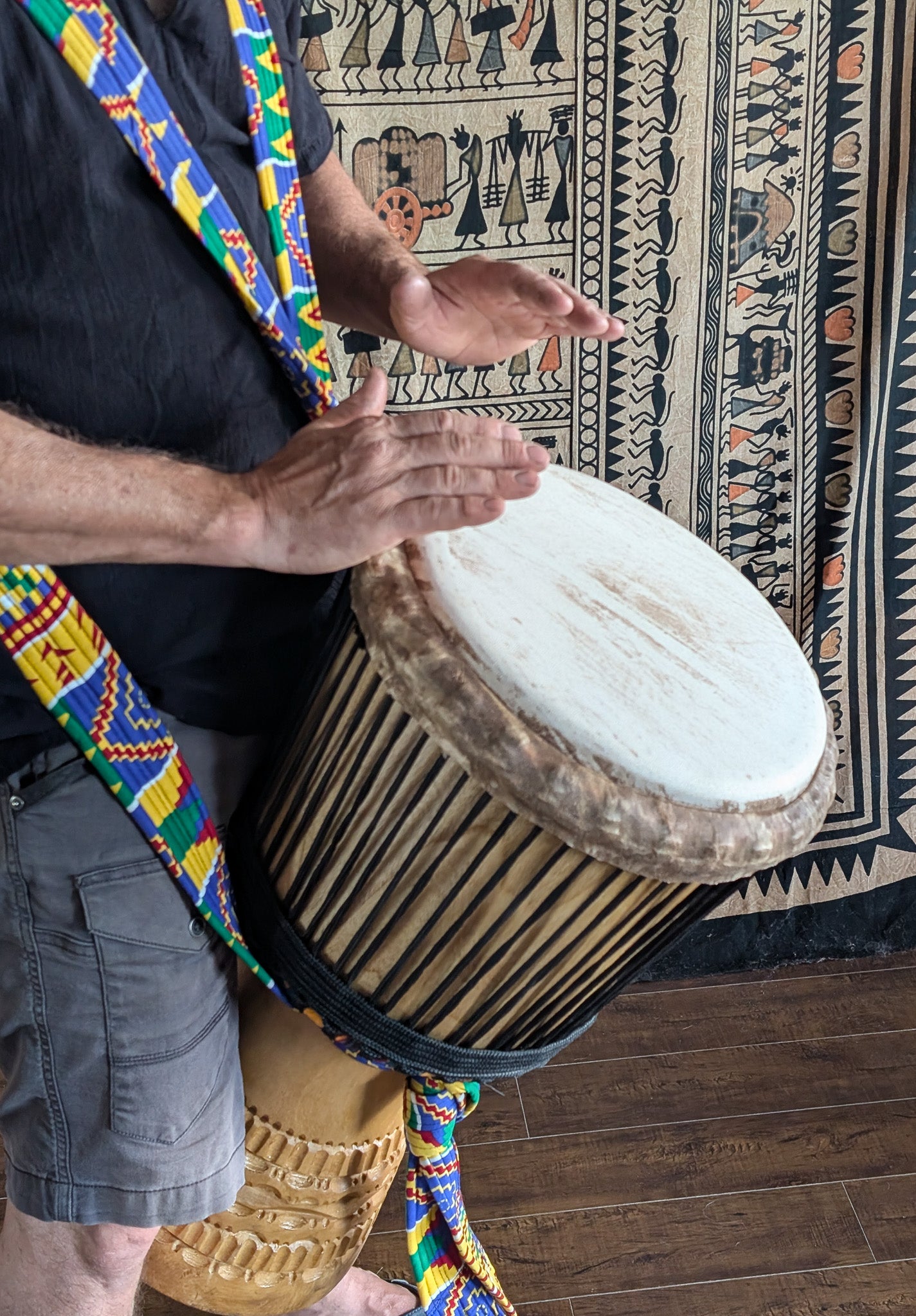
If you are serious enough to be researching price points, you have already outgrown the "toy" phase. To get the most "bang for your buck," we recommend a budget of $250 to $400.
In this range, you aren't just buying a drum; you're buying an authentic instrument that supports your growth rather than hindering it. We personally select our beginner and intermediate collections to ensure they hit that "Sweet Spot"—professional sound at a price that respects your budget.
[Explore Our Curated Beginner & Intermediate Djembes]
Still Weighing Your Options?
We’ve put together the most comprehensive resource on the web to help you navigate woods, skins, and sizes without the stress.

Share:
Best Djembe Size for Beginners: How to Find Your Perfect Fit
Buying an Authentic Djembe: How to Find a Trusted Shop (Canada, USA And Beyond)